The first month: fuzz, yellow leaves and rescues
Published Sep 1, 2026 · 8 min read
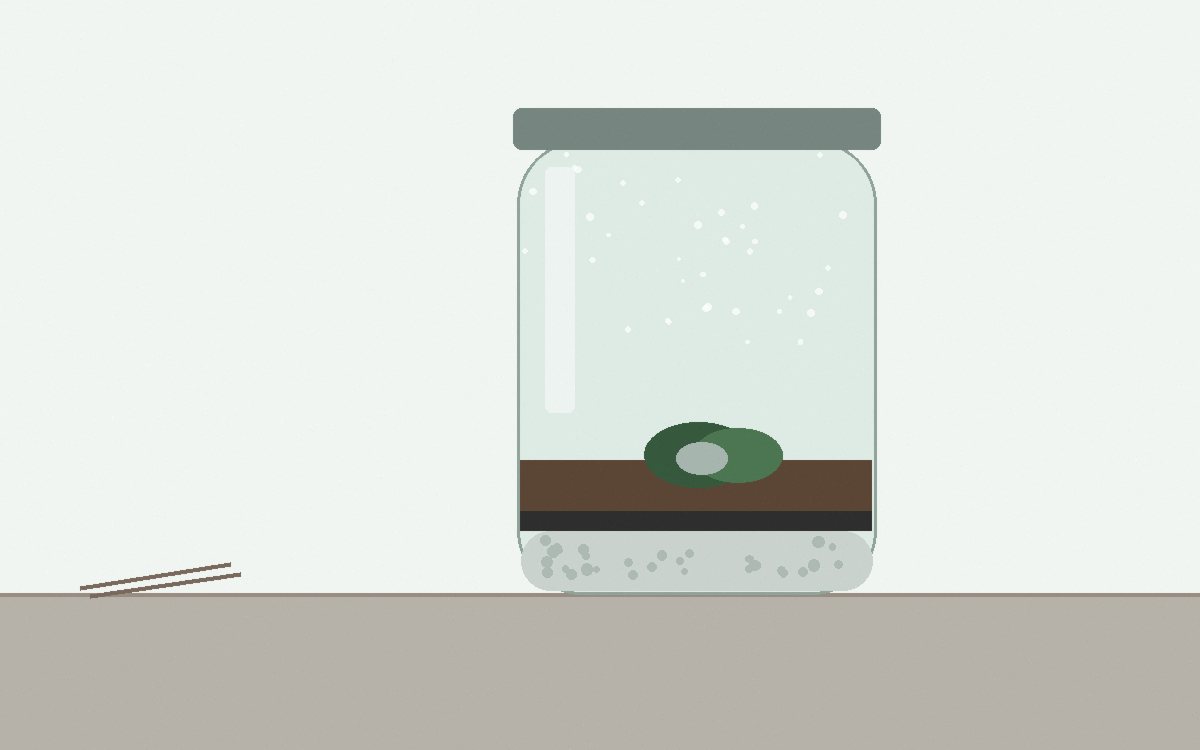
Nearly everything alarming happens in the first month, and nearly none of it matters — this is the field guide.
The first month after the lid goes on is when nearly everything alarming happens and nearly none of it matters. White fuzz on a leaf, a yellowing frond, fog that won't lift, a tiny snail — a new jar is a small ecosystem finding its balance, and the first weeks are its weather. This note is the field guide to that month: what's normal, what needs a two-minute fix, and the rare things that mean a rebuild.
Week one: settling
Expect: moss looking flat and unsure; a fern dropping a frond or two; fog heavier than it will be later, because you misted generously on planting day; nerve plants wilting and recovering as they get used to the humidity. Do: nothing except read the fog (Jar 05) and air the lid if it's streaming. Don't: poke, re-mist, move the jar, or replant anything. The single most useful skill in the hobby is keeping your hands in your pockets for seven days.
Weeks two to three: the fuzz
White, grey or fluffy mould almost always appears somewhere in a new jar — on a dead leaf, a piece of bark, a moss edge, the soil surface. It looks disastrous and is nearly always harmless: a sealed jar full of fresh organic matter is a mould's idea of a good time, and it settles as the jar's own bacteria and (if you added them) springtails get established. The response: lift the lid, dab the fuzz off with a cotton bud or a chopstick wrapped in tissue, remove any dead leaf it was living on, and air the jar for two hours. Repeat when it returns; it usually gives up by week four. A jar that grows fuzz on living moss and green leaves rather than dead matter is too wet — the fix is airing, not sprays.
Yellow leaves are pruning, not panic. A plant moved into a sealed jar drops the leaves it grew for a drier life and grows new ones suited to the humidity; that changeover happens in the first month and looks like decline. Snip yellow and brown leaves off at the stem with small scissors through the mouth of the jar (a dead leaf in a sealed jar is a mould colony waiting), and watch for the new growth, which is usually visible within two weeks. A plant with no new growth by week five and a soft, dark base was the wrong plant for a lid — take it out and plant moss in the gap.
Uninvited residents
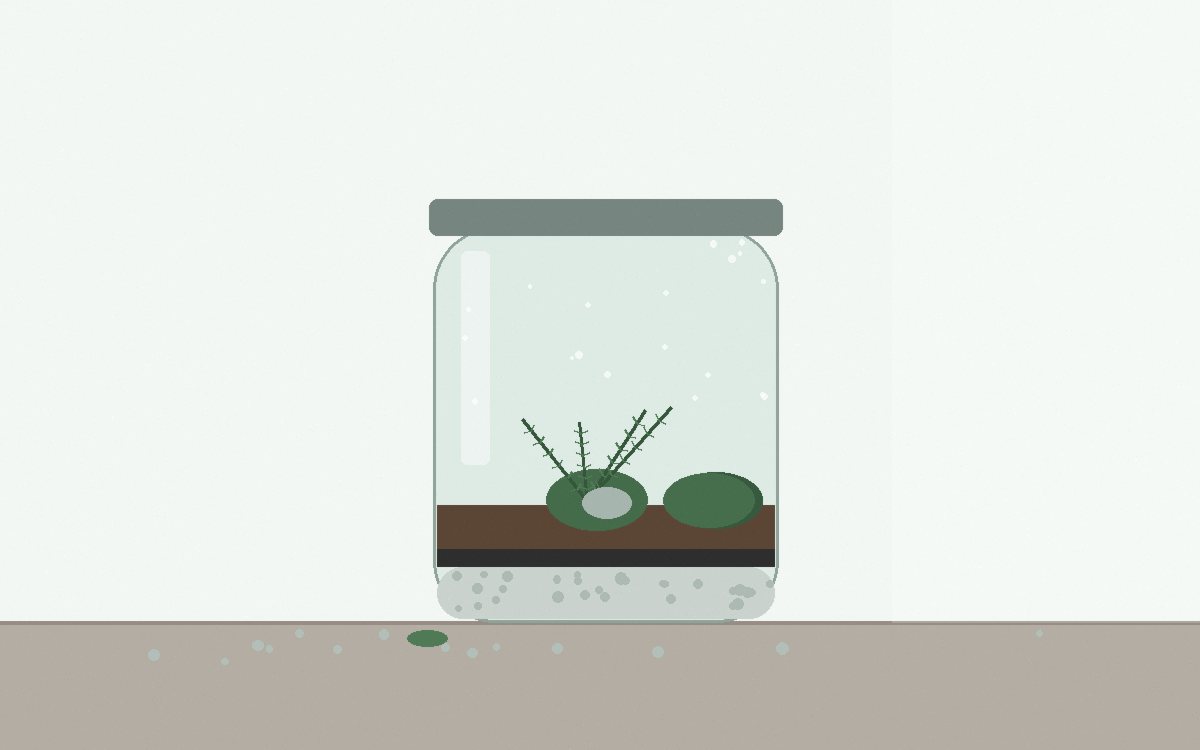
A snail, a few fungus gnats, a tiny worm, a springtail you didn't add: everyone gets one. Snails and slugs come out at night and can be lifted with tweezers by torchlight; a jar with a persistent snail is a jar whose moss came with eggs, and patience plus torchlight wins in a fortnight. Fungus gnats mean the soil surface is staying wet — airing dries it, and a fine layer of sand over bare soil discourages them. Springtails and small white worms are cleanup crew and can stay. Anything you can't identify, photograph and look up before deciding; most jar life is benign.
Week four: the turn
Somewhere around the fourth week a good jar visibly turns: moss brightens and starts creeping onto stone, ferns unfurl new fronds that are noticeably lusher than the old, the fog settles into its regular breath, the fuzz stops returning, and the jar begins to look composed rather than arranged. From here the timescale changes from days to months. The only jobs left are the monthly glass clean and the very occasional mist, and the pleasure of watching it fill in.
When to rebuild
Rarely: a persistent sour smell that airing doesn't fix (soil has gone anaerobic — usually from a cup-watering on planting day); gravel that is muddy because the barrier was skipped; or a jar where every plant has rotted because the whole cast was wrong for a lid. Rebuilding is an hour and most of the materials are reusable after a rinse; the second jar is always better than the first, which is the real reason the hobby is addictive.

Questions from month one
How much fuzz is too much?
Fuzz on dead matter, in patches you can dab off: normal. Fuzz spreading across living moss and soil in a sheet, returning within a day: too wet — air the jar for two hours daily for a week and remove any decaying leaves. A jar that smells sweet and earthy is fine; a jar that smells sour has a water problem underneath the fuzz problem.
Should I feed the plants?
No, ever, in a closed jar. Feeding makes plants grow faster in a box that wants them slow, and it feeds mould. A jar runs on the slow decay of its own leaf litter; that's its entire nutrient cycle, and it's enough for years.
The moss went brown in one patch and green everywhere else.
Usually a spot that pressed against the glass or sat under a drip line from the lid. Lift the brown bit out, press a fresh pinch of moss from elsewhere in the jar into the gap, and it closes over in a month. Moss is the most forgiving thing in the jar.
That's the shelf. Build the second jar from jar 01 — it will be better than the first.