The windowsill trap
Published Sep 1, 2026 · 7 min read
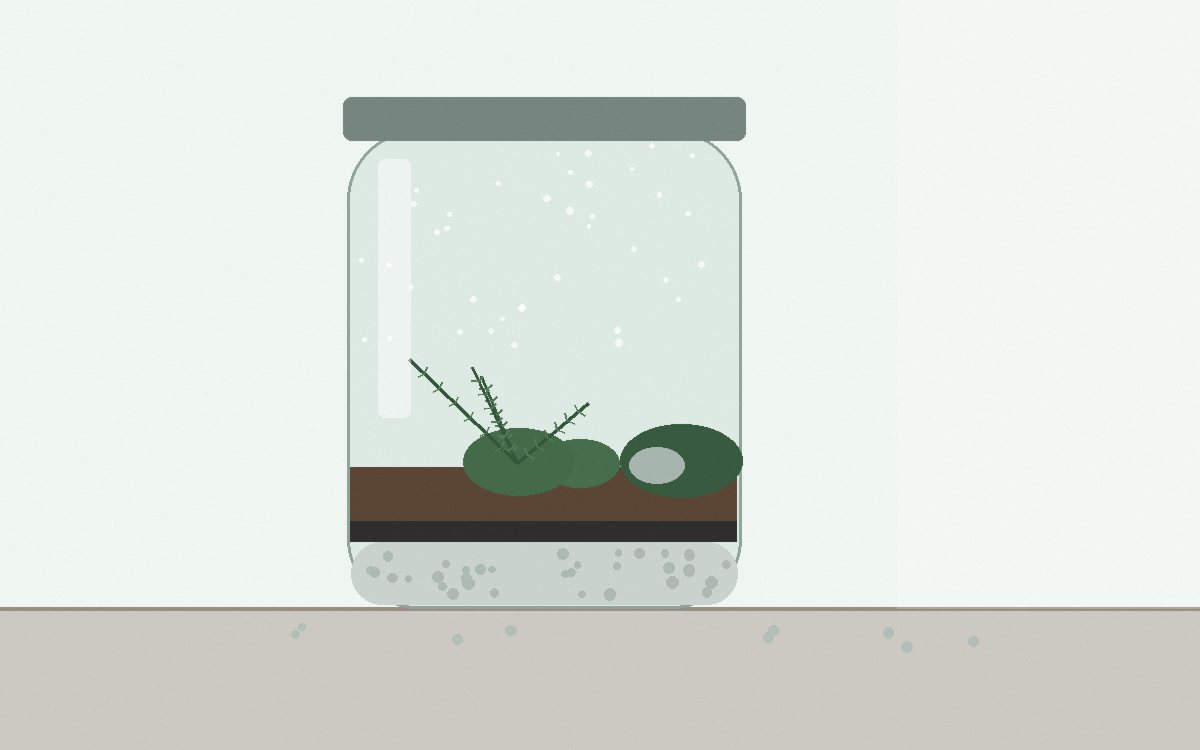
The windowsill in the sun is where a jar sparkles — and where a sealed jar steams. Move it a metre back.
The most natural place to put a beautiful glass jar is the windowsill, in the sun, where it sparkles. It is also the place most likely to kill it. A sealed jar in direct sun is a greenhouse with no vents: the air inside can climb far above the room's temperature within an hour, and moss and ferns cook. This note is about where terrariums actually live well — and it's usually a metre back from that lovely window.
Why the sill cooks
Glass lets short-wave sunlight in and traps the long-wave heat it becomes; that's the whole greenhouse effect, and a lidded jar is a perfect small one. Put a thermometer probe inside a sealed jar in a sunny window and watch it read fifteen or twenty degrees above the room on a bright afternoon. Rainforest-floor plants have never in their lives seen direct sun, and they show it: pale, scorched patches on moss within days, ferns browning from the tips, a general soggy collapse as the overheated air holds more water than the plants can bear. The jar didn't dry out. It steamed.
Where a closed jar is happy
Bright, indirect light is the phrase, and here's what it means in a real room: a spot where you could comfortably read a book by daylight without a lamp, but where the sun's disc never actually falls on the glass. In practice: a metre or two back from a sunny window; right beside a north-facing window (or south-facing in the southern hemisphere); a bright hallway; a bathroom with a frosted window, which is the terrarium's natural habitat. The test is your hand: hold it where the jar will sit at the brightest time of day — if it casts a sharp-edged shadow, that's direct sun, move back; a soft, fuzzy shadow is right.
The morning exception. An hour of weak early-morning sun — the kind that comes in low and gold before eight — is tolerated by most closed jars and helps moss colour up. Afternoon sun of any duration is the killer. If the only spot you have gets afternoon sun, a sheer curtain between window and jar turns it into indirect light; if the jar is open (succulents, stones), the sunny sill was always its home.

Too dark: the slower failure
The opposite mistake — a jar on a bookshelf deep in a dim room — fails slowly rather than fast: the fog rhythm stalls, moss thins and darkens, ferns stretch pale toward whatever light exists, and mould gets an easy start. The reading-a-book test catches it: if you'd want a lamp on to read there at noon, the jar wants one too.
Lamps: the dark flat's answer
Any bright LED lamp with a daylight-ish bulb, forty centimetres or so above the jar, on a timer for ten or twelve hours a day, turns a dark corner into a fine terrarium spot. It needn't be a special grow light — a bright desk lamp works — and LEDs run cool, so they don't cook the jar. Small jars under a lamp are how we grow moss in the windowless bathroom, and it's the most reliable spot in the flat because the light never varies. The timer matters more than the lamp: plants want a regular day.
The other enemies of position
Radiators and heat vents below or beside the jar (warm draughts dry the room side of the glass and cook the jar from beneath); the top of a fridge (heat and vibration); a spot where the door bangs (moss hates being shaken); and a windowsill that goes cold at night in winter, which stalls the cycle. A jar likes what a person likes in a room: steady, bright, out of the direct sun, nothing blowing on it.

Questions from the sill
Can I keep a closed jar in an office with only overhead fluorescents?
Usually, if the desk is bright enough to read at — modern office lighting is often ample for moss and ferns, and it's on a schedule, which they like. Test with the cheapest jar first; if the moss holds its colour for a month, the spot is fine.
Should I move the jar with the seasons?
Only if the sun moves onto it. A spot that's indirect in summer may get low winter sun through a window; watch for sharp shadows in the cold months and slide the jar back a little if they appear. Otherwise, jars prefer not to travel.
How do I know if my jar is cooking before it's too late?
Touch the glass on a bright afternoon: if it's warm to the hand rather than cool, it's in too much sun. Heavy fog at midday in summer is the other tell — a jar that clears by noon in spring and fogs all afternoon in July has had the sun arrive on it.
Placed right — now the month of watching it settle: the first month.